Before the Decision Is Made
The most useful time to understand a consequence is while the choice that creates it can still be changed.
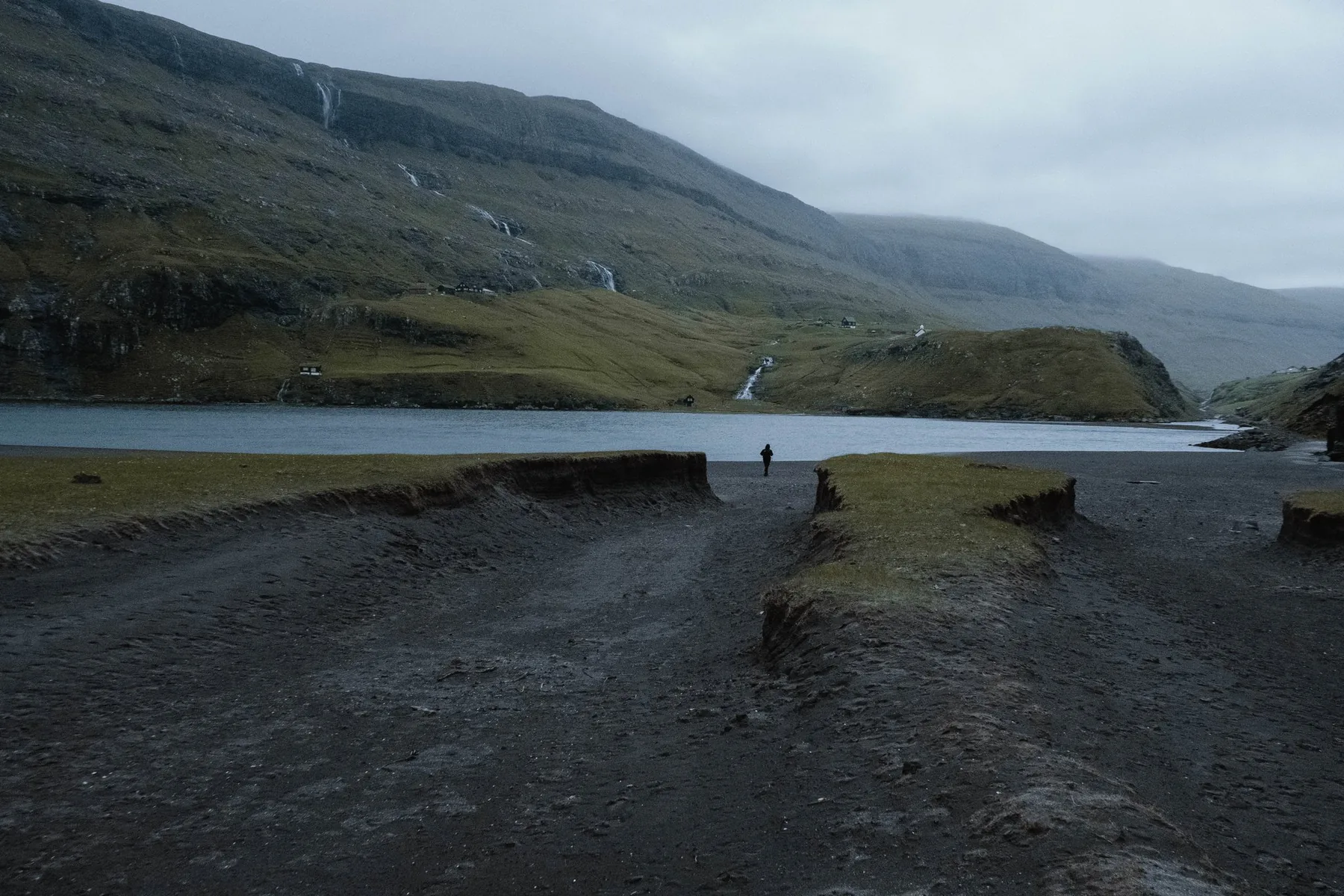
ODIN_ visual archive
Most consequences become easiest to understand after the decision has already been made.
A forest is gone. A river is polluted. A species has declined. A project has failed. A supply chain has created damage somewhere nobody was looking.
Then the evidence becomes visible. We investigate what happened, write the report and explain the lesson.
That work matters. But there is a harder and more useful question:
What would it take to make the consequence visible while the decision can still be changed?
The decision is where futures diverge
Environmental work often starts with awareness. Make people care. Explain the problem. Show the damage.
Awareness can matter enormously. But most real outcomes are produced by decisions: what gets financed, permitted, designed, bought, built, protected, restored or ignored.
Those decisions are rarely made with perfect information. They happen inside deadlines, budgets, politics, habits, incentives and incomplete evidence.
So the practical challenge is not simply to create more information.
It is to improve the conditions around the decision.
What is happening here? What do we actually know? What remains uncertain? What options exist? What will each option affect? Who carries the cost? Who receives the benefit? What is reversible? What is not?
A better decision does not require omniscience. It requires the important reality to be difficult to miss.
Evidence needs to arrive in time
A scientific paper can be rigorous and still arrive too late for a procurement decision on Tuesday morning.
A dataset can be excellent and still be useless to the person who does not know it exists. A company can publish a sustainability report while the information that would change a purchasing decision remains buried hundreds of pages away.
The gap is often not between knowledge and ignorance. It is between knowledge and usable context.
That is a design problem.
The answer is not to simplify until all nuance disappears. It is to preserve the evidence while making the decision legible: source, confidence, uncertainty, alternatives and consequences in a form a human being can actually use.
Better does not mean painless
There is a comforting fantasy that every ecological problem has a solution where everyone wins immediately.
Reality is less polite.
There are trade-offs. A cleaner technology may cost more today. Protecting one place may move pressure somewhere else. A policy can create benefits at one scale and new problems at another. A choice that is environmentally stronger may be inaccessible to someone with less money or time.
Hiding those tensions does not make a system more persuasive. It makes it less trustworthy.
A useful decision system should make trade-offs clearer, not make them disappear.
And it should remember something environmental communication sometimes forgets: people live inside the decisions too.
If the better option is impossible to afford, find or use, moral instruction will not make it scale. Information, incentives and practical reality have to meet.
Unknown has to remain unknown
One of the easiest mistakes in decision systems is to treat missing evidence as if it were negative evidence.
A company does not disclose something, so we assume the worst. A project has not been studied, so we give it a reassuring average. A data gap is quietly converted into a score.
That creates false certainty.
Sometimes the honest answer is simply: insufficient evidence.
That answer can still change behaviour. If better disclosure increases confidence and eligibility, transparency becomes valuable. The system creates an incentive to produce better evidence without pretending to know what it does not know.
The loop cannot end at the choice
A decision is not proof that the decision was good.
The world has to answer back.
What happened after we acted? Did the river improve? Did the intervention survive? Did people use the product? Did the promised restoration occur? Did an unintended consequence appear somewhere else?
That result should change the next decision.
In simple terms:
context → evidence → options → consequences → choice → action → result → learning
The exact machinery can vary. The principle should not.
A system that never learns from outcomes is not intelligence. It is presentation.
This is one reason I am building 4PLANET
I do not think the world needs one organisation to own every answer.
Scientists should remain scientists. Field organisations should keep their hard-won local knowledge. Companies, communities and public institutions will continue to make different kinds of decisions.
What I think is missing is better connective tissue between what is known, what can be done, who is already doing it and what happened next.
A way to make ecological reality easier to see before it becomes ecological history.
That is a much harder problem than making another sustainability website.
It is also, to me, a much more useful one.
Make the consequence visible while the choice is still alive.
ODIN ODDEKALV_
Notes from an unfinished body of work.